
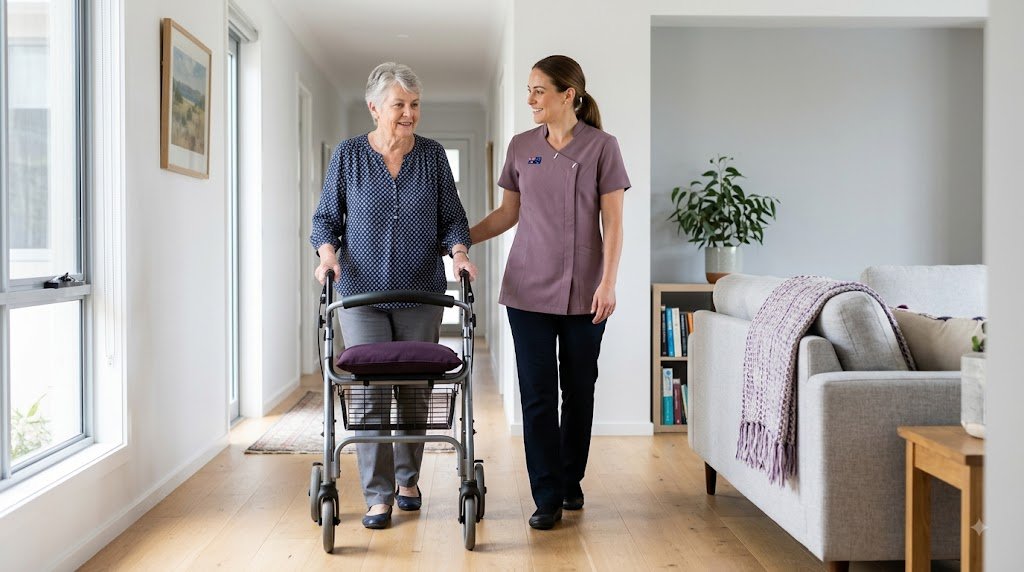
Caring for someone who has difficulty walking, standing or moving around the home can involve much more than providing physical assistance. The right mobility aids can make everyday routines easier to manage while giving the person receiving care more opportunity to move around with confidence and participate in daily activities.
For carers, choosing equipment is not simply about finding something that looks convenient. A walking frame, wheelchair, recliner chair or scooter needs to suit the person’s abilities, the environment and the tasks they need to complete.
The best choice may also change over time. Someone recovering from an injury may only need temporary support, while a person with a progressive condition may require different equipment as their needs change.
Quick Answer
The most useful equipment for carers can include walking frames and rollators, wheelchairs, mobility scooters, lift recliner chairs, bathroom equipment and selected daily living aids. The right option depends on the person’s mobility, strength, balance, environment and level of assistance required.
A health professional such as an occupational therapist or physiotherapist may be able to assess the person’s needs and recommend appropriate equipment. Healthdirect Australia also notes that mobility equipment can support everyday activities and may help people move more independently.
Why carers need the right mobility aids
A carer’s role often involves helping with several transitions throughout the day: getting out of bed, standing from a chair, walking to the bathroom, showering, preparing meals or getting in and out of a vehicle.
Equipment can help with some of these tasks, but it should not be viewed as a replacement for appropriate care or professional assessment.
For example, someone who can walk independently but becomes tired after a short distance may benefit from a suitable rollator. Someone who cannot safely walk for longer distances may need a wheelchair for particular outings. Meanwhile, a person who struggles to stand from a low chair may benefit from a powered lift recliner.
The important question is not simply, “Which product is best?” It is, “What does this person need to do, and what is making that task difficult?”
That distinction can prevent carers from buying equipment that looks useful but does not actually solve the problem.
Choosing mobility aids for different needs
There is no single piece of equipment that works for every person. Consider the person’s current ability, the environment and how much support they need from a carer.
Walking Aids and Mobility Equipment
Walking frames, walkers and rollators can provide additional stability for people who can still walk.
A basic walking frame may suit someone who needs a stable support point while moving short distances. A rollator can offer more freedom of movement and may include features such as a seat and storage basket.
HW Care’s walking aids range includes different walker and rollator options for indoor and outdoor use.
Before choosing one, check the person’s height, weight, grip strength and ability to operate the brakes. The frame’s width also matters if the user needs to pass through narrow doorways or move around furniture.
Do not choose a walking aid simply because it is lightweight or inexpensive. Instead, make sure the person can use and manage it comfortably.
Wheelchairs for Mobility Support
A wheelchair can help when someone cannot walk comfortably for longer distances or when their energy and balance fluctuate.
Depending on the model and the person’s strength, users can either propel manual wheelchairs themselves or have a carer push them. They can help with appointments, shopping centres, community activities and other situations where walking proves difficult.
HW Care’s wheelchairs provide another option for people who need seated mobility support.
Think beyond the chair itself. Carers should consider storage, transport, doorway widths, ramps, kerbs and the surfaces where the wheelchair will operate.
Mobility Scooters for Independent Living
Mobility scooters can help some people travel further without relying on their walking endurance.
They may prove particularly useful for community access, shopping trips or outdoor movement. However, a scooter is not automatically suitable for everyone. The user needs sufficient physical and cognitive ability to operate the controls safely, and carers should consider the intended environment.
You can explore HW Care’s mobility scooters when considering a scooter.
Before making a decision, think about where the scooter will stay, how you will transport it and whether the person can comfortably control and manoeuvre it.
Lift Recliner Chairs for Mobility Support
Standing from a low or soft chair can prove surprisingly difficult for someone with reduced leg strength, balance problems or limited mobility.
A powered lift recliner can assist with the transition between sitting and standing. It may also provide a comfortable place to rest during the day.
HW Care’s chairs range offers options when seating and easier transfers form part of the person’s needs.
Measure the available space before purchasing. Check the chair’s dimensions, weight capacity, control layout and the amount of room the reclining mechanism requires.
Bathroom Mobility Aids and Equipment
Bathrooms can present particular challenges because they combine slippery surfaces, tight spaces, standing and sitting.
Depending on the person’s needs, equipment such as shower chairs, bathroom supports and other aids may make personal care easier to manage.
The bathroom equipment range can help carers explore options for making everyday bathroom routines more manageable.
However, bathroom equipment needs to fit the actual space. A shower chair that is too large may make movement around the bathroom difficult. Consider the position of existing fixtures, doorways and available floor space before choosing equipment.
Bedroom equipment
Getting in and out of bed can become challenging when someone has reduced strength or movement.
Bedroom equipment can support positioning, transfers and everyday routines. The appropriate solution depends on the individual’s needs and the layout of the room.
HW Care’s bedroom equipment range provides options worth considering when bedroom mobility is part of the care challenge.
Mobility aids for safer daily care
Equipment should support both the person receiving care and the person providing it.
Use up and down arrow keys to resize the meta box pane.
Use up and down arrow keys to resize the meta box pane.
For carers, repeatedly assisting someone to stand, transfer or walk can be physically demanding. The right equipment may reduce the amount of manual effort required, although carers should still receive appropriate instruction for any equipment they use.
Using mobility aids safely at home
Start by looking at the environment.
A walking frame that works well in a spacious hallway may be difficult to manoeuvre around a crowded living room. A wheelchair may fit comfortably through the front door but struggle to turn inside a bathroom.
Use up and down arrow keys to resize the meta box pane.
Check for:
- Narrow doorways
- Loose rugs
- Cluttered walkways
- Uneven flooring
- Poor lighting
- Steps and thresholds
- Wet bathroom surfaces
- Furniture that restricts turning space
Healthdirect advises that the correct size, stability and suitability of mobility equipment are important considerations, particularly when equipment is being used on public transport or in different environments.
Training matters as well. A person who has never used a rollator, wheelchair or scooter may need time to become familiar with the brakes, controls and manoeuvring.
If the equipment is difficult to operate, do not assume the person simply needs more practice. It may not be the right match.
What to consider before buying mobility equipment
A product can be well designed and still be unsuitable for a particular person.
Before purchasing, consider these practical questions.
Who will use it?
Look at height, weight, strength, balance, dexterity and cognitive ability.
Where will it be used?
Consider the home layout, outdoor surfaces, ramps, steps, doorways and storage.
How often will it be used?
Equipment for occasional community outings may have different requirements from equipment used throughout the day.
Can the person operate it independently?
Controls, brakes, handles and adjustment mechanisms need to be manageable for the user.
Will the carer need to transport it?
A wheelchair or walker that is difficult to fold or lift may become impractical if it needs to travel regularly.
Does it need adjustment or professional assessment?
Some equipment requires accurate fitting or clinical advice. My Aged Care notes that more complex or customised equipment may require advice or prescription from a suitably qualified health professional.
Can the equipment be trialled?
A trial can be particularly useful when the person has not used that type of equipment before. The NDIS recommends considering a trial for assistive technology where appropriate, particularly when determining whether an item meets the person’s needs.
When to reassess mobility aids
A person’s needs can change.
A walking frame that was appropriate six months ago may become difficult to use after a change in strength, balance or endurance. Similarly, someone who initially needed a wheelchair only for longer outings may eventually require more regular seated mobility.
Watch for signs such as:
- Increasing difficulty standing
- More frequent loss of balance
- Difficulty operating brakes or controls
- Changes in walking distance
- Increased fatigue
- Difficulty moving around the home
- Equipment becoming uncomfortable or difficult to handle
If something has changed, arrange an appropriate assessment rather than simply replacing the product with a more advanced model.
Buying mobility aids with confidence
Good equipment selection starts with the person, not the product.
Before purchasing, write down the activities that are difficult. For example, perhaps the person can walk from the bedroom to the kitchen but struggles to stand for meal preparation. Or perhaps they can walk around the house but cannot manage a shopping centre without becoming exhausted.
These details provide a much clearer starting point than simply searching for the “best” mobility product.
It is also worth measuring the home. Record doorway widths, bathroom dimensions, turning areas and available storage. If a product needs to fit into a vehicle, check the boot space and how easily it can be lifted or folded.
For more ideas about equipment that can support everyday tasks, explore HW Care’s living aids range.
If you are unsure about what equipment may be appropriate, an occupational therapist, physiotherapist or other suitably qualified professional may be able to assess the person’s functional needs.
NDIS and aged care funding for mobility equipment
Funding depends on the person’s circumstances and the program through which they receive support.
For NDIS participants, assistive technology may be funded when it is directly related to the person’s disability, supports their goals, meets NDIS requirements and is supported by appropriate evidence. The NDIS does not automatically fund every item recommended by a health professional.
The NDIS currently describes low-cost assistive technology as equipment costing less than $1,500, with eligibility and safety requirements still applying. Examples include walking sticks, canes and four-wheeled walker frames.
For more complex equipment, additional advice, assessment, evidence or approval may be required.
Older Australians may also access equipment through the Australian Government’s Support at Home program. The Assistive Technology and Home Modifications scheme can provide approved participants with equipment such as walking frames, wheelchairs and other products based on assessed needs.
The key point for carers is simple: do not assume that a particular product will automatically be funded. Check the current requirements of the relevant program and obtain professional advice where needed.
For current information, carers can refer to the NDIS assistive technology guidance and My Aged Care information about assistive technology and home modifications.
Frequently Asked Questions
What are the most useful mobility aids for carers?
The most useful option depends on the person’s needs. Common choices include walking frames, rollators, wheelchairs, mobility scooters, lift recliner chairs and bathroom equipment. A carer should consider the person’s strength, balance, ability to use the equipment and the environment where it will be used. Professional assessment can be valuable when the person’s needs are complex or changing.
How do I choose a walking aid for an older person?
Choose based on the person’s balance, strength, height, weight, walking ability and intended environment. A walking frame may provide greater stability, while a rollator may offer more flexibility for someone who can walk but needs additional support or a place to rest. Correct height adjustment is important, and professional advice may be appropriate if there are significant balance or mobility concerns.
Can mobility equipment be funded through the NDIS?
Some assistive technology may be funded through the NDIS when it meets the relevant requirements. The equipment generally needs to relate directly to the participant’s disability, support their goals and meet current NDIS funding rules. The NDIS also considers evidence, safety, value for money and whether another service should provide the item. Funding should never be assumed simply because a product has been recommended.
Can older Australians get equipment through aged care?
Yes, eligible older Australians may be able to access equipment through the Support at Home program’s Assistive Technology and Home Modifications scheme. Depending on the person’s assessed needs, equipment can include walking frames, wheelchairs, shower equipment and other assistive products. Some equipment may require assessment or prescription from a suitably qualified health professional.
Should a carer receive training before using equipment?
Yes. Training is particularly important for equipment that involves brakes, powered controls, transfers, adjustments or more complex operation. The person using the equipment and the people supporting them should understand how it works and any relevant safety considerations. The NDIS also highlights the importance of teaching participants and their support people how to use assistive technology safely.
How often should mobility equipment be checked?
There is no single schedule that applies to every product. Check equipment regularly for worn tyres, loose components, damaged brakes, unstable parts or other signs of wear. Follow the manufacturer’s maintenance instructions and arrange servicing where required. Equipment should also be reassessed when the person’s abilities or circumstances change.
Is the most expensive equipment always the best option?
No. The best equipment is the option that safely and effectively meets the person’s needs. A more expensive product may offer features that are unnecessary for a particular user, while a simpler option may be easier to operate. Consider function, fit, environment, durability, maintenance and value rather than price alone.
Conclusion
Choosing the right mobility aids is about supporting a person’s everyday life, not simply giving them another piece of equipment.
For carers, the right choice can make tasks such as walking, transferring, bathing, resting and getting out into the community more manageable. However, suitability matters. A product needs to match the person’s abilities, the home environment and the way it will actually be used.
Start with the task that is causing difficulty. Measure the space, consider the person’s capabilities and seek professional advice when needed. Where funding is involved, check the current NDIS or aged-care requirements rather than assuming an item will be covered.
HW Care provides equipment across mobility, bathroom, bedroom, seating and daily living categories. If you are unsure where to start, explore the HW Care resources or contact HW Care to discuss the equipment you are considering.
Disclaimer:
This article provides general information for Australian readers and is not a substitute for individual medical, occupational therapy, physiotherapy or other professional advice. Equipment suitability depends on the individual and their environment. NDIS and aged-care funding rules can change, so always check current government guidance and obtain appropriate professional advice before purchasing or using higher-risk or complex equipment.