
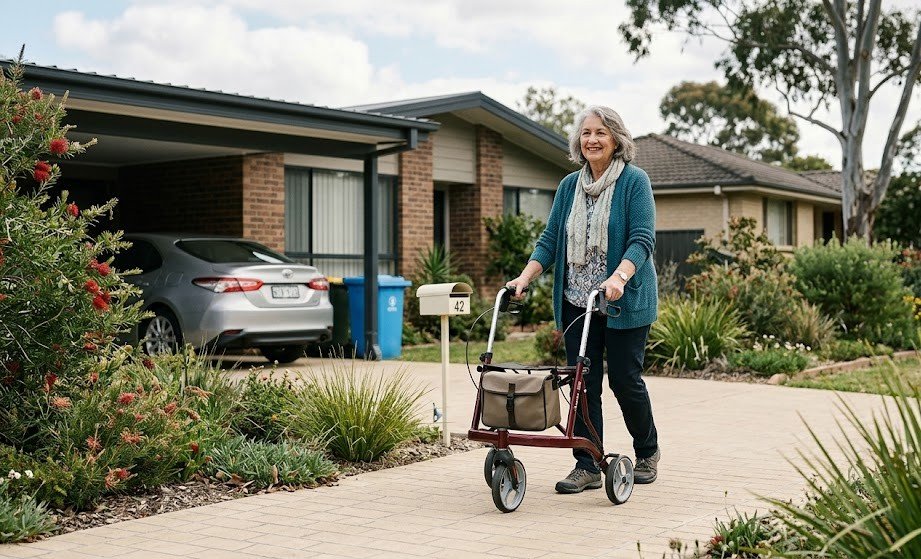
Choosing mobility equipment is not simply a matter of picking the product with the most features. The right option depends on how you move, where you use it, your strength and balance, your environment and the level of support you need.
For some people, a walking frame may provide useful support around the home. Others may need a wheelchair for longer distances or a mobility scooter for community travel. Therefore, the best choice should match your everyday needs rather than someone else’s experience.
This guide explains the main types of mobility equipment available to Australians and the practical questions to consider before making a decision.
Quick Answer: How Do You Choose Mobility Equipment?
The right mobility equipment should match your mobility needs, physical abilities, environment and intended use. Start by identifying where you experience difficulty, such as walking, standing, transferring or travelling outdoors. Then consider the equipment’s size, weight, adjustability, stability, storage and transport requirements. If your needs are complex or changing, a physiotherapist, occupational therapist or other qualified health professional can help assess suitable options.
Why the Right Mobility Equipment Matters
Mobility can change over time. An injury, surgery, neurological condition, disability or ageing may affect strength, balance, coordination or endurance.
As a result, equipment that suited you previously may no longer be appropriate.
The right product can make everyday tasks more manageable. It may also help you conserve energy, move around your home more comfortably or participate in activities outside the house.
However, equipment should support your abilities rather than replace appropriate movement or rehabilitation. Your needs should remain the starting point.
Consider these questions before shopping:
- Where do you need support?
- Do you need help indoors, outdoors or both?
- How far do you normally travel?
- Can you stand up and sit down safely?
- Do you have enough strength to operate the equipment?
- Do you need to lift it into a vehicle?
- Will you use it on footpaths, shopping centres or uneven outdoor surfaces?
- Do you have enough storage space at home?
Your answers can quickly narrow down the most suitable categories.
Mobility Equipment for Different Needs
There is no single product that works for everyone. Different mobility challenges call for different forms of support.
Choosing Mobility Equipment for Walking and Balance
If you can walk independently but need additional stability, a walking aid may be worth considering.
Canes can provide a relatively small amount of support. Walking frames generally offer more stability, while rollators can combine walking support with wheels and, in some models, a seat.
However, the correct height and style matter. An incorrectly adjusted walking aid can affect posture and make movement more difficult.
If you are unsure about the appropriate aid, ask a qualified health professional to assess your walking pattern, strength and balance.
Mobility Equipment for Recovery, Rehabilitation and Changing Needs
Mobility needs can change during recovery from an operation, injury or health event.
For example, someone recovering from hip or knee surgery may initially need more support and gradually use less equipment as their mobility changes. However, recovery varies from person to person.
For related information, you can also explore HW Care’s hip and knee rehabilitation resources.
A temporary need does not mean equipment is unimportant. The product still needs to suit your current ability, home environment and rehabilitation plan.
If your needs change, review the equipment rather than continuing to use an unsuitable product simply because you already own it.
Walking Aids: Frames, Rollators and Canes
Walking aids are among the most common mobility products used in Australia.
A walking frame can provide a stable base for people who need support while standing and walking. A rollator uses wheels and may include hand brakes and a seat, depending on the model.
A cane can offer lighter support and may suit people who need assistance on one side. However, a cane is not automatically the best option for everyone with balance difficulties.
When comparing walking aids, look at:
- Handle height and adjustability
- Overall weight
- Frame width
- Wheel size and design
- Brake operation
- Grip comfort
- Seat height, if included
- Indoor manoeuvrability
- Outdoor suitability
- Folding and storage requirements
You can explore HW Care’s range of living aids when considering equipment for everyday activities.
Remember that product specifications alone do not determine suitability. Your physical ability and environment matter just as much.
Wheelchairs for Short-Term and Longer-Term Mobility
Wheelchairs can support people who cannot walk safely or comfortably for particular distances, or who need to conserve energy during daily activities.
Manual wheelchairs generally require the user or another person to propel the chair. Powered options use a motor and controls, although the appropriate configuration depends on the individual.
Before choosing a wheelchair, consider:
- Seat width and depth
- Seat height
- Back support
- Footrest configuration
- Overall chair weight
- Folding requirements
- Vehicle transport
- Indoor turning space
- Outdoor surfaces
- Cushion requirements
- Whether another person will push the chair
For example, a lightweight folding chair may suit occasional transport, while a different configuration may better suit regular use.
See HW Care’s wheelchairs for relevant product options.
A wheelchair should also fit the user and their environment. A professional assessment can be particularly helpful when someone uses a wheelchair frequently or has complex postural or seating needs.
Mobility Scooters for Community Travel
Mobility scooters can help some people travel further in the community when walking long distances becomes difficult.
They can be useful for activities such as shopping, visiting friends or attending appointments. However, a scooter is not automatically suitable for every person with reduced mobility.
Before choosing one, consider where you intend to travel.
For example, check:
- Turning space
- Seat comfort
- Controls and hand function
- Battery range
- Charging requirements
- Scooter dimensions
- Storage
- Vehicle transport
- Footpath and access conditions
- Local requirements for use
You should also consider whether you can safely operate the controls and respond to changing conditions.
Explore HW Care’s mobility scooters if a scooter forms part of your mobility planning.
Bathroom and Daily Living Equipment
Mobility challenges do not only affect walking.
Standing from a toilet, entering a shower or moving around a wet bathroom can also require additional support. Bathroom equipment may help people complete these tasks with less physical effort.
Depending on individual needs, options may include shower chairs, bathroom supports and other accessibility products.
However, bathroom layouts vary significantly. Doorways, shower dimensions, floor surfaces and available space all affect product suitability.
You can review HW Care’s bathroom equipment and consider how each product would work within your actual bathroom.
Daily living products can also help with sitting, reaching, dressing and other household activities. HW Care’s chairs provide another category to consider when seating support forms part of your daily routine.
What to Check Before Buying Mobility Equipment
Before purchasing anything, think beyond the product photograph.
1. Measure your environment
Measure doorways, hallways, bathrooms and storage areas. Also check the turning space available in the rooms where you plan to use the product.
A mobility aid that works in a showroom may feel difficult to manoeuvre in a narrow hallway.
2. Consider transport
If you regularly travel by car, think about whether the product fits inside your vehicle.
Weight matters too. A product that one person can easily fold and lift may require assistance for someone else.
3. Check your physical ability
Consider grip strength, balance, vision, coordination and endurance.
For powered products, also consider whether you can operate the controls comfortably.
4. Think about your routine
Do you need the equipment only at home? Or will you use it at shopping centres, medical appointments and community activities?
Your routine can influence the most practical option.
5. Check adjustability
Adjustable handles, seats or footrests can make a product easier to personalise. However, adjustability does not replace a proper assessment of fit.
6. Consider maintenance
Ask how the equipment should be cleaned, inspected, charged or serviced.
For powered equipment, understand the charging requirements and battery care instructions before use.
Professional Assessment and Safe Use
A professional assessment can be particularly useful when mobility problems involve balance, weakness, pain, neurological changes or multiple health conditions.
A physiotherapist or occupational therapist can assess how you move and how your home environment affects mobility. They may also recommend equipment that matches your functional needs.
A professional can also check whether the equipment is adjusted correctly.
After you receive a mobility aid, read the manufacturer’s instructions and follow recommended maintenance procedures. If the equipment develops a fault, stop using it if continued use could create a safety concern and seek appropriate advice.
For people supporting someone at home, practical assistance can also form part of the wider picture. HW Care provides information about carer assistance and support needs.
For additional Australian health information, Healthdirect Australia provides government-supported health information and guidance for Australians.
NDIS and Aged Care Funding in Australia
Funding for assistive technology depends on the person’s circumstances and the program they access.
For NDIS participants, some assistive technology may be funded when it meets the relevant NDIS requirements and relates to the person’s disability-related needs. Funding is not automatic, and the appropriate evidence or assessment may depend on the circumstances.
The NDIS provides current information about supports, assistive technology and participant plans.
Older Australians should also check the current arrangements through My Aged Care. Eligibility and available support depend on the person’s circumstances and the relevant aged-care program.
Therefore, do not purchase expensive equipment on the assumption that a government program will reimburse the cost.
Check the current requirements first. Where an assessment or supporting evidence is required, obtain it from an appropriately qualified professional.
Frequently Asked Questions
How do I know which mobility equipment is right for me?
Choose equipment based on your mobility needs, physical abilities and where you plan to use it. A physiotherapist or occupational therapist can help if you have complex or changing needs.
Can mobility equipment be funded through the NDIS?
Some mobility equipment may be funded through the NDIS, depending on your circumstances and current requirements. Check the NDIS for the latest information before purchasing.
Should I get an assessment before buying a mobility aid?
An assessment can help you choose equipment that matches your strength, balance, mobility and daily routine. It is especially useful when your needs are complex or changing.
What is the difference between a walking frame and a rollator?
A walking frame provides a stable support base, while a rollator has wheels and usually includes hand brakes. The right option depends on your balance, strength and walking ability.
Can I use mobility equipment indoors and outdoors?
Some products work in both settings, but suitability depends on the equipment and environment. Check doorways, surfaces, turning space and the manufacturer’s specifications.
How should I maintain my mobility equipment?
Follow the manufacturer’s cleaning and maintenance instructions. Regularly check wheels, brakes, batteries and moving parts for wear or damage.
Does mobility equipment mean I should stop walking?
No. Mobility equipment can support movement while you continue appropriate activity or rehabilitation. Your healthcare professional can advise on the best approach for your needs.
How often should I replace a mobility aid?
There is no fixed replacement schedule. Inspect your equipment regularly and replace or repair it when components become worn, damaged or unsuitable for your changing needs.
Conclusion: Choosing Mobility Equipment With Confidence
The right mobility equipment should fit your life, not simply meet a product description.
Start by identifying what you want to achieve. Then consider your physical abilities, home environment, transport needs, daily routine and intended use. Walking frames, rollators, wheelchairs, mobility scooters and bathroom equipment each serve different purposes.
Most importantly, do not choose solely on appearance or price. Where your needs are complex, changing or difficult to assess, professional advice can help you make a more informed decision.
For Australians looking for mobility and daily living solutions, explore HW Care for product information and support. If you need help discussing your requirements, you can also contact HW Care.
Disclaimer: This article provides general information for Australian readers and does not replace personalised medical, physiotherapy, occupational therapy or other professional advice. Product suitability depends on individual circumstances. NDIS and aged-care funding rules can change, so check current official government guidance before making purchasing or funding decisions.