Choosing the right Independent Living Aids can make everyday activities easier, safer and more manageable for seniors, people with disability and anyone experiencing changes in mobility. For example, the right equipment can provide support when walking around the home, preparing meals, showering, resting comfortably or accessing the community.
However, choosing suitable mobility equipment can sometimes feel overwhelming. There are many products available, and the most expensive option is not always the best choice. Instead, the right solution depends on the person’s needs, home environment, daily activities and level of support required.
In this guide, we explain the different types of Independent Living Aids, how to choose suitable equipment and what Australian seniors and NDIS participants should consider before making a decision.
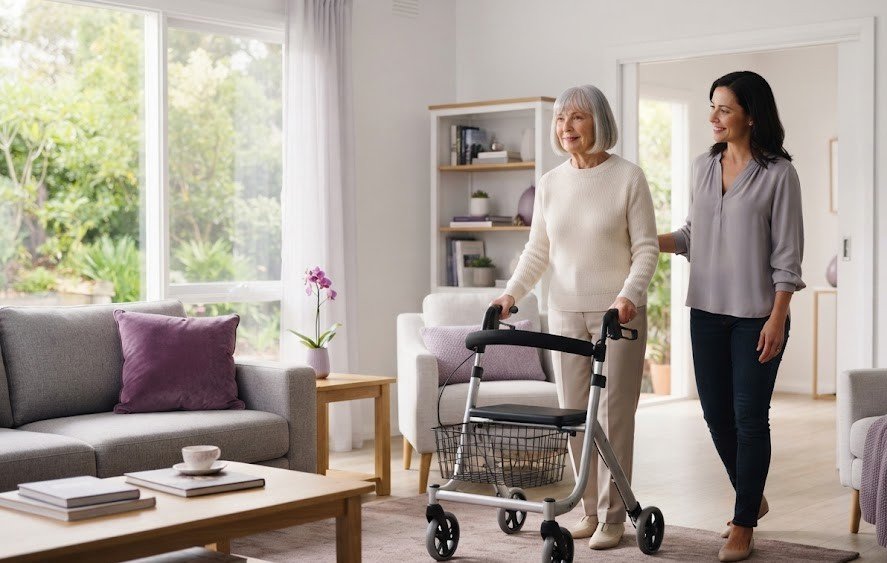
Main image alt text: Older Australian woman using independent living aids with a walking frame at home
What Are Independent Living Aids?
Independent Living Aids are products designed to help people complete everyday activities with greater ease, confidence and support. These products are also commonly described as independent living equipment, daily living aids, assistive equipment or mobility support products.
For example, common Independent Living Aids include:
- Walking sticks and walking frames
- Rollators and wheeled walkers
- Manual wheelchairs
- Power wheelchairs
- Mobility scooters
- Shower chairs and bathroom equipment
- Lift recline chairs
- Adjustable beds
- Height-adjustable chairs
- Bed and bedroom support products
- Kitchen and dressing aids
- Home safety equipment
Ultimately, the most suitable equipment depends on individual mobility, strength, daily routines and the environment where the product will be used.
You can explore the full range of Independent Living Aids and mobility equipment from HW Care Australia.
Independent Living Aids for Seniors and NDIS Participants
Ageing, injury, disability or changes in mobility can affect how easily someone completes everyday activities. For example, standing from a chair, walking to the bathroom or carrying shopping bags may become more challenging over time.
However, the purpose of assistive equipment is not to replace independence. Instead, well-chosen equipment can provide support that helps people continue doing the activities they enjoy.
For seniors, mobility equipment may help them remain active at home and in the community. Similarly, for NDIS participants, suitable assistive technology may support disability-related goals and everyday living needs.
HW Care Australia provides a range of equipment designed to support mobility, comfort and independence, including walking aids, mobility scooters and other mobility solutions.
In addition, the range includes equipment such as lift recline chairs, shower chairs, adjustable beds and manual and power wheelchairs.
Why Independent Living Equipment Matters
Losing confidence with everyday movement can affect more than physical ability. For example, it can influence social activities, hobbies, family involvement and participation in the community.
Someone who feels uncertain walking outside may avoid shopping trips or visiting friends. As a result, a suitable mobility aid may provide additional support that helps them participate in activities more comfortably.
However, equipment should always match the person’s actual needs.
A common mistake is choosing a product based only on appearance or price. For example, a lightweight walker may look convenient. However, if it does not provide enough stability or suit the person’s height, it may not be the right option.
Before purchasing Independent Living Aids, consider:
- Where will the product be used?
- Is it mainly for indoor or outdoor use?
- Does the person need occasional support or daily assistance?
- Does the equipment fit comfortably?
- Can the person use it safely and confidently?
- Does it suit the person’s home environment?
Therefore, taking time to understand the actual problem can make it easier to select suitable equipment.
How Independent Living Aids Support Daily Life
Independent Living Aids cover a wide range of equipment designed to assist with everyday tasks. In particular, they can support older adults, people living with disability and individuals experiencing changes in mobility.
These products can assist with:
- Moving around the home
- Showering and toileting
- Sitting and standing safely
- Preparing meals
- Sleeping comfortably
- Accessing the community
- Completing personal care tasks
In addition, the right assistive equipment can reduce the physical effort required for certain activities.
For example, a lift recline chair may make standing easier for someone who finds sit-to-stand movements difficult. Similarly, bathroom equipment may provide additional support in an area where wet surfaces and limited space can make movement more challenging.
Types of Independent Living Aids for Everyday Activities
Different people need different levels of assistance. For example, some may only need a small daily living aid, while others may require larger mobility equipment.
Below are some common categories of Independent Living Aids available to support everyday activities.
Walking Aids and Mobility Support Products
Walking aids include walking sticks, walking frames, rollators and wheeled walkers.
As a result, these products may provide additional stability and support while moving around.
When choosing a walking aid, consider:
- Height adjustment
- Weight capacity
- Grip comfort
- Wheel design
- Frame stability
- Indoor and outdoor suitability
- Storage requirements
For example, a walking frame designed primarily for outdoor areas may not be practical inside a smaller home with narrow hallways.
You can explore walking aids from HW Care Australia to compare available mobility solutions.
Wheelchairs and Mobility Equipment
Wheelchairs can support people who have difficulty walking longer distances or require mobility assistance.
For example, wheelchair options can include:
- Manual wheelchairs
- Folding wheelchairs
- Transit wheelchairs
- Self-propelled wheelchairs
- Power wheelchairs
When choosing a wheelchair, consider:
- How often it will be used
- The user’s mobility level
- Transport requirements
- Home access
- Seating comfort
- Weight and portability
- Indoor and outdoor use
Therefore, it is important to consider both the person’s needs and the environment in which the wheelchair will be used.
You can view HW Care Australia’s mobility equipment range.
Mobility Scooters for Independent Living
Mobility scooters are commonly used by people who want additional support when travelling outdoors, shopping or participating in community activities.
Before choosing a mobility scooter, consider:
- Battery range
- Turning space
- Storage requirements
- Transport options
- Terrain
- Seating comfort
- Where the scooter will be stored
For example, a compact folding scooter may suit someone who needs portability and short-distance support. In contrast, a larger mobility scooter may be more suitable for regular outdoor travel.
HW Care Australia currently lists mobility scooters among its product categories.
You can shop mobility equipment from HW Care Australia.
Bathroom Safety Equipment and Daily Living Aids
In particular, bathrooms require careful consideration because they involve water, movement and confined spaces.
Bathroom Independent Living Aids may include:
- Shower chairs
- Shower stools
- Toilet support equipment
- Raised toilet seats
- Bathroom support rails
As a result, suitable bathroom equipment may make daily routines easier and provide additional confidence.
However, every bathroom is different. Therefore, check measurements, available space and installation requirements before selecting equipment.
HW Care Australia currently offers shower chairs and related bathroom equipment. HHealth & Wellness
You can explore HW Care Australia for available bathroom and daily living products.
Seating and Comfort Equipment for Independent Living
Many people spend a significant amount of time sitting during the day. Poor seating support can make standing, relaxing or completing daily activities more difficult.
For example, lift recline chairs may provide additional assistance for people who need support when moving from sitting to standing.
In addition, height-adjustable chairs can provide another seating option depending on the person’s requirements.
HW Care Australia lists both lift recline chairs and height-adjustable chairs among its current product categories.
You can view HW Care’s available equipment.
How to Choose the Right Independent Living Equipment
Selecting equipment is not only about choosing a product category. Instead, it is about finding something that fits naturally into the person’s daily routine.
Ultimately, the best independent living equipment is usually the option that someone can use comfortably, confidently and consistently.
Before purchasing any Independent Living Aids, consider the following factors.
Consider the Person’s Daily Living Needs
First, start by looking at which activities are becoming difficult.
For example:
- Is walking becoming tiring?
- Is getting in and out of a chair challenging?
- Is showering becoming uncomfortable?
- Is the person avoiding activities they previously enjoyed?
- Is moving around outdoors becoming difficult?
By understanding the actual challenge, you can narrow down suitable daily living aids.
For instance, someone who only needs occasional outdoor support may need a different solution from someone who requires assistance throughout the day.
Consider the Home Environment
Similarly, the same independent living equipment may work well in one home but not another.
Before purchasing, check:
- Door widths
- Hallway space
- Bathroom layout
- Floor surfaces
- Storage areas
- Door thresholds
- Steps and ramps
- Outdoor access
For example, a larger mobility device may provide excellent outdoor support but may be difficult to manoeuvre inside a smaller home.
Therefore, home layout should always be part of the decision-making process.
Check Equipment Fit, Comfort and Safety
Correct fitting is one of the most important parts of choosing mobility equipment.
In addition, equipment should match the user’s:
- Height
- Weight requirements
- Strength level
- Mobility ability
- Comfort preferences
- Ability to operate the equipment safely
Otherwise, poorly fitted equipment may become difficult to use and may discourage regular use.
When requirements are complex, professional advice from an occupational therapist, healthcare professional or experienced equipment supplier may be helpful.
Independent Living Aids for Safer and More Comfortable Living
The right Independent Living Aids can support people in maintaining their routines while adapting to changing mobility needs.
However, equipment should always be selected carefully. A product that works well for one person may not suit another person with different abilities, goals or home conditions.
For this reason, consider the following principles when choosing assistive equipment.
Choose Function Over Appearance
Modern mobility equipment comes in many designs. However, appearance should not be the only deciding factor.
Instead, ask:
- Does it solve the actual problem?
- Is it comfortable?
- Can the person use it independently?
- Is it suitable for the intended environment?
- Is it easy to store and transport?
Ultimately, functionality and safety should take priority over appearance.
Consider When to Buy Independent Living Equipment
Some people wait until daily activities become extremely difficult before exploring equipment options. On the other hand, others purchase products without understanding whether they are suitable.
A better approach is to review mobility needs regularly and make changes when they are genuinely helpful.
Furthermore, early planning can allow families and carers to make informed decisions instead of rushing during a difficult situation.
Popular Independent Living Aids and Daily Living Equipment
There are many types of assistive products available in Australia. However, the right choice depends on individual circumstances.
Bedroom Equipment and Transfer Aids
Bedroom products may support comfort and easier routines.
For example, bedroom equipment can include:
- Bed rails
- Over-bed tables
- Adjustable beds
- Transfer support products
- Other bedroom accessories
Ultimately, the goal is to create a practical environment where daily activities can be completed more easily.
HW Care Australia currently offers home care adjustable beds and over-bed tables among its products.
You can browse HW Care’s equipment range.
Daily Living Aids for Everyday Tasks
Small daily living aids can make everyday tasks more manageable.
For example, these products may include:
- Reaching aids
- Dressing assistance products
- Kitchen support tools
- Personal care aids
- Bathroom support products
In addition, smaller assistive products can address specific challenges without requiring major changes to a home.
Therefore, they may be a practical starting point for people who only need assistance with particular activities.
NDIS Assistive Equipment and Independent Living Aids
Some Independent Living Aids may be considered through the NDIS when they relate to a participant’s disability-related needs and goals.
However, equipment is not automatically funded for every participant.
The NDIS states that assistive technology must meet its relevant funding requirements. Current guidance says funding decisions consider factors including disability-specific needs, goals, supporting evidence and whether another funding source is more appropriate.
Therefore, participants should check their plan and seek appropriate advice before purchasing equipment.
For the most current information, read the official NDIS Assistive Technology guidance.
How NDIS Assistive Technology Funding Works
NDIS assistive technology can range from simple daily living products to more complex equipment.
For example, the NDIS currently describes low-cost assistive technology as items costing less than $1,500. Examples include walking sticks, four-wheeled walker frames, shower chairs and some household support items.
In contrast, higher-risk equipment may require specialised advice, assessment or supporting information before purchase. The NDIS identifies examples of higher-risk assistive technology such as power wheelchairs, adjustable beds and certain transfer aids.
Importantly, cost and risk are not always the same thing. Some lower-cost products can still require professional advice when there are safety concerns.
For this reason, participants should review the current NDIS requirements before purchasing equipment.
You can also read the official NDIS information about how to buy or rent assistive technology.
Using Independent Living Aids to Make Your Home Safer
A supportive home environment can make everyday activities easier. In addition, small changes may have a meaningful impact.
For example, consider the following areas.
Bathroom Safety and Independent Living Equipment
First, bathrooms are one of the most important areas to review because they involve water, movement and transfers.
Possible equipment options include:
- Shower seating
- Shower chairs
- Bathroom rails
- Toilet support equipment
- Raised toilet seats
If necessary, an assessment may help identify whether equipment or home modifications are appropriate.
The NDIS also notes that assistive technology can help people perform activities more safely and independently.
Living Areas and Mobility Support
Meanwhile, in common living spaces, consider:
- Clear walking paths
- Suitable seating height
- Good lighting
- Reduced trip hazards
- Furniture placement
- Accessible storage
As a result, furniture placement can make a difference. A walking aid is easier to use when there is enough space to move comfortably.
Entryways and Outdoor Access
Finally, outdoor access should also be considered.
Look at:
- Steps
- Slopes
- Driveways
- Door thresholds
- Ramps
- Storage space for equipment
Therefore, a mobility solution should match where and how often it will be used.
Maintaining and Safely Using Mobility Support Products
To keep mobility equipment working correctly, regular checks can help identify problems early.
Helpful maintenance steps include:
- Check wheels and brakes regularly
- Keep moving parts clean
- Follow manufacturer instructions
- Store equipment correctly
- Replace worn parts when needed
- Arrange servicing where recommended
For mobility scooters, check:
- Battery condition
- Tyre condition
- Charging practices
- Controls and lights
Similarly, for walking equipment, regularly inspect:
- Rubber tips
- Handles
- Frame condition
- Folding mechanisms
If equipment feels unstable or difficult to operate, stop using it and seek appropriate advice.
Frequently Asked Questions About Independent Living Aids
What Are Independent Living Aids?
Independent Living Aids are products that support people with everyday activities such as mobility, personal care, household tasks and home safety.
For example, they can include walkers, wheelchairs, mobility scooters, bathroom products, seating solutions and daily living tools.
Ultimately, suitability depends on the person’s needs, environment and ability to use the equipment correctly.
Which Mobility Aid Is Best for an Older Person?
The best mobility aid depends on the person’s balance, strength, lifestyle and where the equipment will be used.
For example, a walking stick may suit someone needing minor support, while another person may require a walker, wheelchair or mobility scooter.
When needs are unclear, a professional assessment can help identify the most suitable option.
Can NDIS Participants Receive Funding for Mobility Equipment?
Some mobility equipment may be funded through the NDIS. However, funding is not automatic.
Current NDIS guidance indicates that assistive technology must meet relevant requirements, including being related to the participant’s disability, helping with their goals, being something the NDIS can fund and being supported by appropriate evidence.
Therefore, participants should check their current plan and seek appropriate advice before purchasing equipment.
For current information, visit the official NDIS Assistive Technology page.
Are Mobility Aids Only for Elderly People?
No. Mobility aids can support people of different ages who experience disability, injury or reduced mobility.
Instead of being limited to older adults, assistive equipment can support independence and daily activities based on individual needs.
How Do I Know If Independent Living Equipment Will Fit My Home?
Before purchasing, measure important areas including doorways, hallways, bathrooms and storage spaces.
In addition, consider where the product will be used most often.
If the equipment is complex or the home environment is challenging, professional assessment may be recommended.
Should I Buy Mobility Equipment Online Without an Assessment?
It depends on the type of product and individual circumstances.
For example, simple, low-risk items may be suitable after checking measurements and requirements. However, equipment involving higher safety risks, complex mobility needs or specialised fitting may benefit from professional advice.
The NDIS recommends seeking advice when appropriate, particularly for higher-risk assistive technology.
How Often Should Mobility Equipment Be Checked?
Mobility equipment should be checked regularly according to manufacturer guidance and how frequently it is used.
In particular, basic inspections of wheels, brakes, batteries and moving parts can help identify problems early.
If equipment is damaged or unsafe, it should not be used until it has been checked.
Final Thoughts on Choosing Independent Living Aids
Ultimately, finding the right Independent Living Aids is about understanding the person first and the equipment second.
Importantly, the best solution is not always the biggest, newest or most expensive product. Instead, it is the equipment that fits comfortably into someone’s daily life and supports their individual goals.
For seniors, NDIS participants, families and carers, taking time to compare options, check measurements and seek professional advice when needed can make the decision much easier.
Finally, HW Care Australia provides a range of mobility equipment and daily living products designed to support people in maintaining independence, comfort and confidence at home and in the community. You can explore HW Care Australia’s products or contact HW Care Australia for more information.
General Information Disclaimer
This article provides general information about mobility equipment, independent living products and NDIS assistive technology. Product suitability depends on individual circumstances, abilities, environment and requirements.
NDIS funding decisions are made according to participant circumstances and current NDIS rules. Therefore, always check the latest official NDIS information and seek appropriate professional advice when selecting equipment for specific health, disability or mobility needs.